Why we release our nitrogen-fixing maize lines under Share-Alike Material Transfer Agreements.
Jack Kloppenburg, Jorge Contreras, Claudia Calderón, and Jean-Michel Ané
I. The lines: a landrace from Oaxaca, adapted to the Midwest
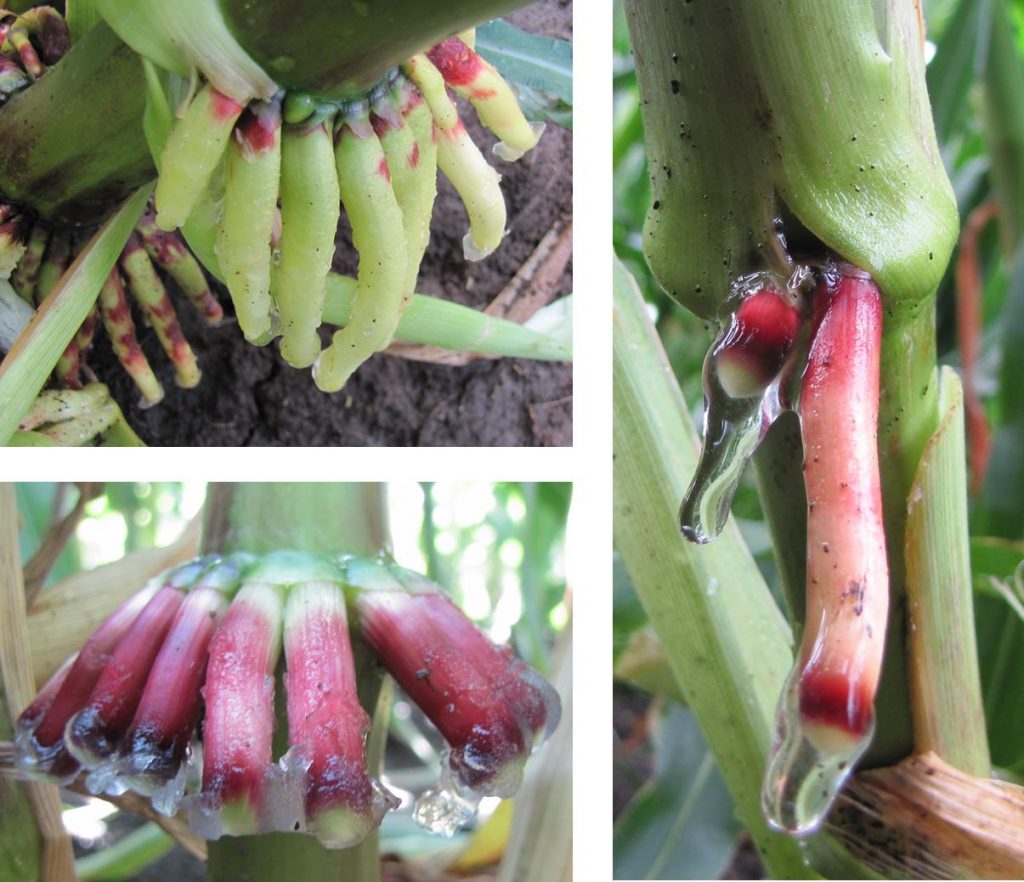
The Nitrogen-Fixing Aerial Roots of Maize project at the University of Wisconsin–Madison breeds maize lines that meet a meaningful share of their own nitrogen demand. The lines grow aerial roots at successive stem nodes. The roots exude a viscous mucilage. The mucilage hosts bacteria that fix atmospheric nitrogen, and the plant takes up the fixed nitrogen.
The trait comes from white Olotón (tsapo’op mokxix in Mixe), a landrace cultivated for centuries in Oaxaca, Mexico. We have introgressed the trait into elite inbreds adapted to the Midwestern United States and produced hybrids that carry it stably. Our preliminary data on these introgressed lines indicate that:
35–40 percent of plant nitrogen needs drawn from the atmosphere by introgressed inbreds in 2025 greenhouse 15N dilution assays.
+50–90 percent yield advantage of trait-carrying hybrids over control hybrids under 36% reduced nitrogen fertilizer inputs in 2025 field trials in Wisconsin.
The lines we are releasing are pre-breeding lines. They are not finished varieties. They stably express the trait and are intended as starting material for breeders who will develop varieties for their own regions.
II. The gift: the seeds came as a gift, not a public-domain transfer
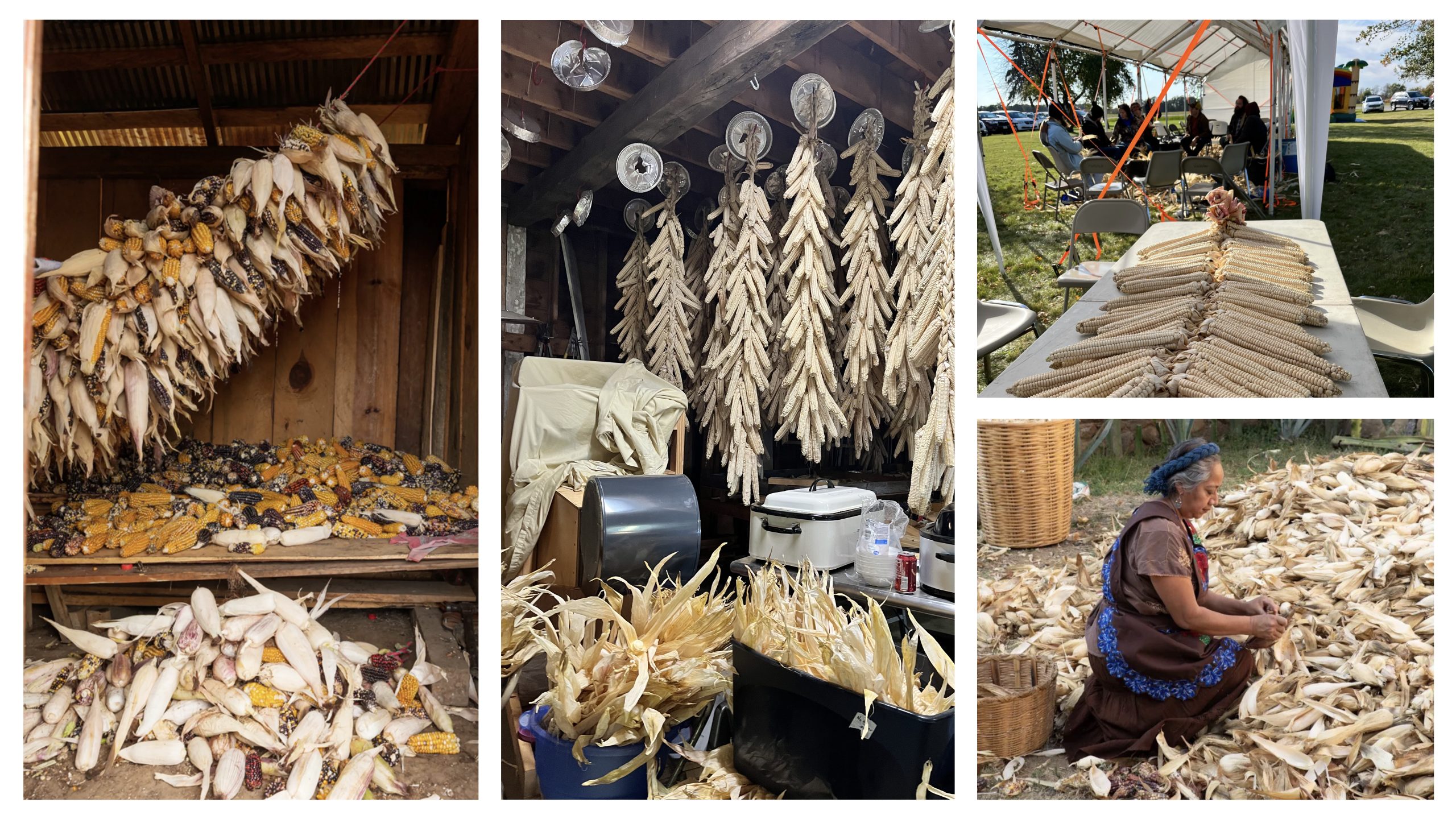
White Olotón seeds reached us through gene banks. Mexican farmers shared the seeds with collectors in the 1950s and 1960s. The Center for Maize and Wheat Improvement (CIMMYT) and the United States Department of Agriculture now hold those accessions.
The act of sharing was a gift. A gift in this context is not a transfer to the public domain. Anthropological work across many traditional societies describes seed-sharing as a relational practice that carries an implicit obligation of reciprocity. Calling these seeds the common heritage of humankind, available without obligation and subject to restriction by intellectual property rights, breaks that practice.
The international frameworks meant to remedy the imbalance, the International Treaty on Plant Genetic Resources for Food and Agriculture and the Nagoya Protocol, have not delivered on their promise of equitable benefit-sharing. The Treaty’s Benefit-Sharing Fund remains nearly empty after more than a decade of negotiation.
III. A Share-Alike approach: a protected commons, not a public domain
To honor the gift of Olotón (tsapo’op mokxix) from which the NFARM lines have been derived, we are releasing our lines under a Share-Alike Material Transfer Agreement. The agreement creates a protected commons based on the principle of reciprocity: a pool of germplasm that anyone willing to share can draw from, and that no one can lock up.
Use without restriction
Recipients may save, exchange, improve, and breed with the seeds, including for sale.
Share derivatives on the same terms
Any line or product bred from the material must travel with the same Share-Alike terms.
No intellectual property claims
Recipients agree not to assert patents, plant variety rights, or other restrictions on the material or its derivatives.
For lines derived from CIMMYT material, the Standard Material Transfer Agreement of the International Treaty applies. We pair that agreement with a Share-Alike Supplement, as Article 6.6 permits for material under development. For lines derived from USDA material collected before 2017, which carry no such obligation, we use our Share-Alike Material Transfer Agreement as a standalone document.
Publications that use the material acknowledge the source, including the farmers of Oaxaca.
I don't mean a bilateral exchange in which an obligation is incurred, and can then be discharged with a reciprocal payment. I mean keeping the gift in motion in a way that is open and diffuse, so that the gift does not accumulate and stagnate, but keeps moving.
Robin Wall Kimmerer, 2024
MTA and SMTA example documents
IV. Reciprocity: keeping the gift in motion
We cannot redress the inequities behind decades of germplasm collection on our own. Other groups, public and private, are pursuing nitrogen-fixing maize from the same Oaxacan material, and most will protect their work with patents and exclusive licenses. We can speak only for our own lines.
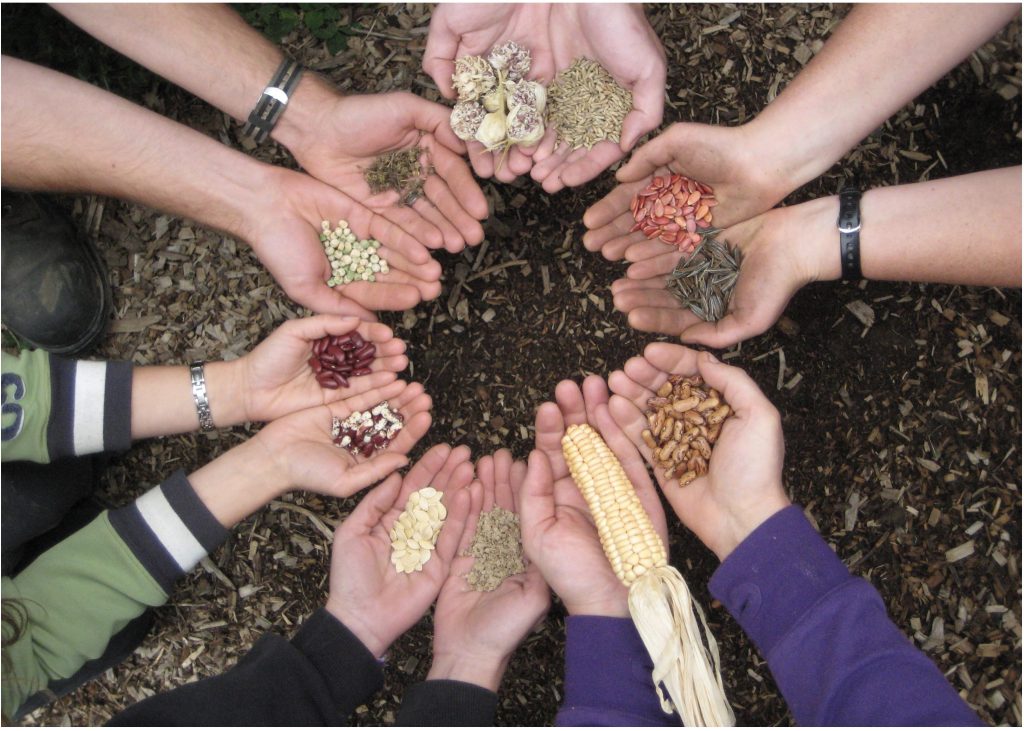
What we can do is keep our lines, and any line bred from them, in motion. The Share-Alike Material Transfer Agreement is our partial reciprocity for the gift of white Olotón maize. We offer the work of the lab back to the world, with the request that the next breeder do the same.
Acknowledgements
Contact to obtain the material via the Share-alike MTA/SMTA
Jean-Michel Ané
Department of Bacteriology
Department of Plant and Agroecosystem Sciences
University of Wisconsin–Madison
5303 Microbial Sciences Building, 1550 Linden Drive, Madison, WI 53706, USA
Funding for this initiative
Baldwin Wisconsin Idea Endowment
Further reading
Kloppenburg J, Calderón CI, Ané JM. The Nagoya Protocol and nitrogen-fixing maize: Close encounters between Indigenous Oaxacans and the men from Mars (Inc.) (2024). Elementa: Science of the Anthropocene 12 (1): 00115. DOI: 10.1525/elementa.2023.00115
Una traducción de Kloppenburg et al. en español está disponible aquí